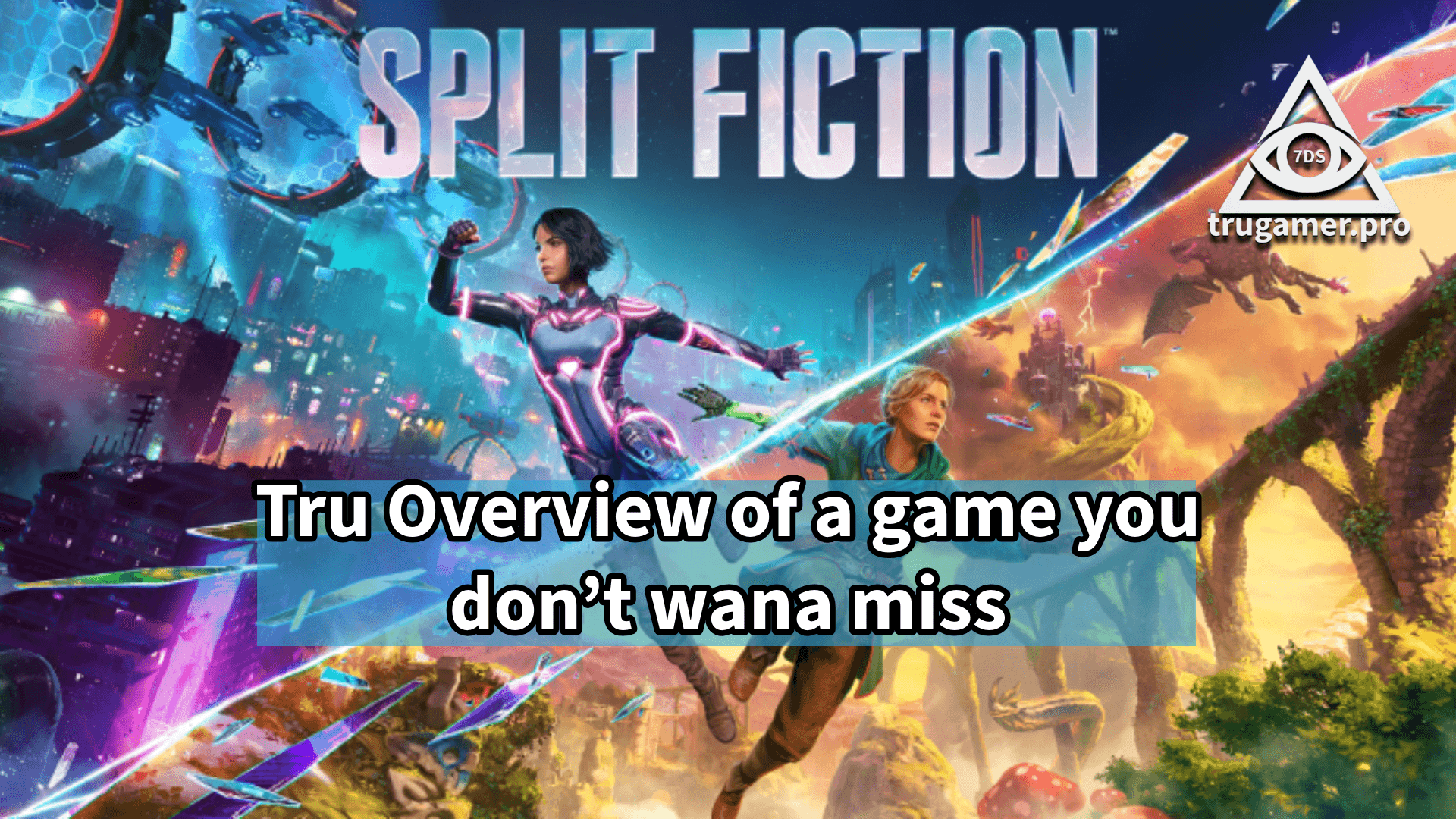
Split Fiction is a 2025 cooperative action-adventure game developed by Hazelight Studios (known for It Takes Two and A Way Out) and published by Electronic Arts. Directed by Josef Fares, it was announced at The Game Awards 2024 and released on March 6, 2025, for PlayStation 5, Windows (via Steam), and Xbox Series X/S, with a Nintendo Switch 2 port on June 5, 2025. Built in Unreal Engine 5 by a team of 80, the game emphasizes split-screen co-op gameplay (local or online) and uses a "Friend's Pass" system, allowing one owner to invite a friend for free. It takes about 12 hours to complete the main story, blending platforming, puzzles, combat, and mini-games across sci-fi and fantasy worlds.
The game has received widespread acclaim, earning a Metacritic score in the high 90s for its innovative co-op mechanics, emotional storytelling, and seamless genre mash-ups. Critics praise it as a "jaw-dropping" evolution of It Takes Two, with "non-stop co-op satisfaction" and a finale among the best in gaming.
Story Rundown (Spoiler-Light)
Two struggling writers—Mio Hudson (a cynical sci-fi author) and Zoe Foster (an optimistic fantasy writer)—are lured to a shady tech company promising publication. Instead, they're connected to a machine called the "Story Harvester," which traps them in a shared simulation, strip-mining their brains for ideas. Thrust together as strangers, they bounce between Mio's dystopian cyberpunk realms and Zoe's whimsical magical domains, uncovering the company's nefarious plot led by the villainous CEO Rader.
As polar opposites (Mio's gritty realism vs. Zoe's hopeful escapism), they must collaborate to exploit "glitches" in the simulation, battle foes, and rewrite their stories to escape. Along the way, they confront personal insecurities, form an unlikely friendship, and blend their genres in chaotic set pieces—like hoverboard chases through neon cities or dragon rides over enchanted forests. The narrative culminates in a high-stakes showdown to destroy the machine, with themes of creativity, collaboration, and the blurred line between fiction and reality. A year later, the duo publishes a novel titled Split Fiction based on their ordeal.
Gameplay Rundown
- Co-op Focus: Exclusively two-player, with asymmetric roles for Mio and Zoe. Players switch control between characters, using complementary abilities (e.g., Mio's tech gadgets in sci-fi levels, Zoe's shapeshifting magic in fantasy ones). Mechanics emphasize communication, like synchronized platforming or one player distracting enemies while the other solves puzzles.
- Worlds and Variety: Levels alternate between Mio's high-tech dystopias (e.g., escaping a supernova, cyber-ninja fights) and Zoe's fantastical realms (e.g., troll battles, magical cat encounters). Expect wild activities: dancing with monkeys, water-skiing pursuits, riding sandsharks or gravity bikes, and spacewalks gone wrong.
- Structure: Linear progression with eight main chapters, each divided into sub-levels. Four chapters include optional "Side Stories" (12 total, 6 per character)—self-contained vignettes accessed via portals, like becoming magical pigs on a fairytale farm or hiking with Viking giants. These add replayability and showcase "crazy chaotic" mini-adventures themed around childhood memories or genre tropes.
- Innovation: Constantly evolving mechanics keep things fresh—no repeated levels. Includes mini-games, boss fights, and environmental puzzles that require perfect co-op timing.
Chapter Breakdown
The game is structured around eight chapters, progressing from the writers' entrapment to their escape. Here's a high-level rundown (light spoilers; for full walkthroughs, check in-game or guides):
1. Awakening (Prologue): Introduction to the simulation; Mio and Zoe meet and navigate initial glitches in a merged tutorial world.
2. Neon Revenge: Mio's sci-fi crime syndicate chase; first three Side Stories (e.g., The Legend of the Sandfish—Dune-inspired hourglass adventure).
3. Hopes of Spring: Zoe's shapeshifting fantasy realm; platforming with giants and magical elements.
4. Echoes of Eternity (Mid-game pivot): Blended worlds; deeper lore on the company's scheme; more Side Stories like Farmlife (pig-farming fairytale).
5. Fractured Realms: Intense co-op challenges crossing genres; emotional character beats.
6. Shadow Weave: Stealth and combat-heavy; Side Stories such as Mountain Hike (Viking-inspired ascent).
7. Core Breach: High-stakes infiltration of the machine's heart; genre-fusing spectacles.
8. Denouement (Finale): Climactic battle against Rader; resolution and epilogue.
Side Stories are optional but rewarding, unlocking cosmetics and lore.
Collectibles like "Story Fragments" encourage exploration.
If you're playing or planning to, grab a friend—it's designed for shared laughs and "mind-blowing moments."
For deeper dives, the official EA site or wiki has detailed guides.
What aspect do you want more on—specific chapters, tips, or comparisons to It Takes Two?